
Structures
Wall-ceiling junction indirect lighting
The wall-ceiling junction is the natural place for indirect light: the wall directs the light to the ceiling, the ceiling spreads it into the room. Three structures, two of which work in a finished room.

Why the wall-ceiling junction
When the strip is at the wall-ceiling junction and the light is aimed upwards, the ceiling acts as a large luminaire that spreads the light through the whole room, soft and shadowless. The wall, in turn, acts as a glare shield in the other direction. That is why most indirect lighting is done exactly here – not in the middle of the ceiling or the middle of the wall.
There are three ways to the wall-ceiling junction, and the choice depends on whether the room is finished or under construction, and whether the profile may be visible.
Three ways
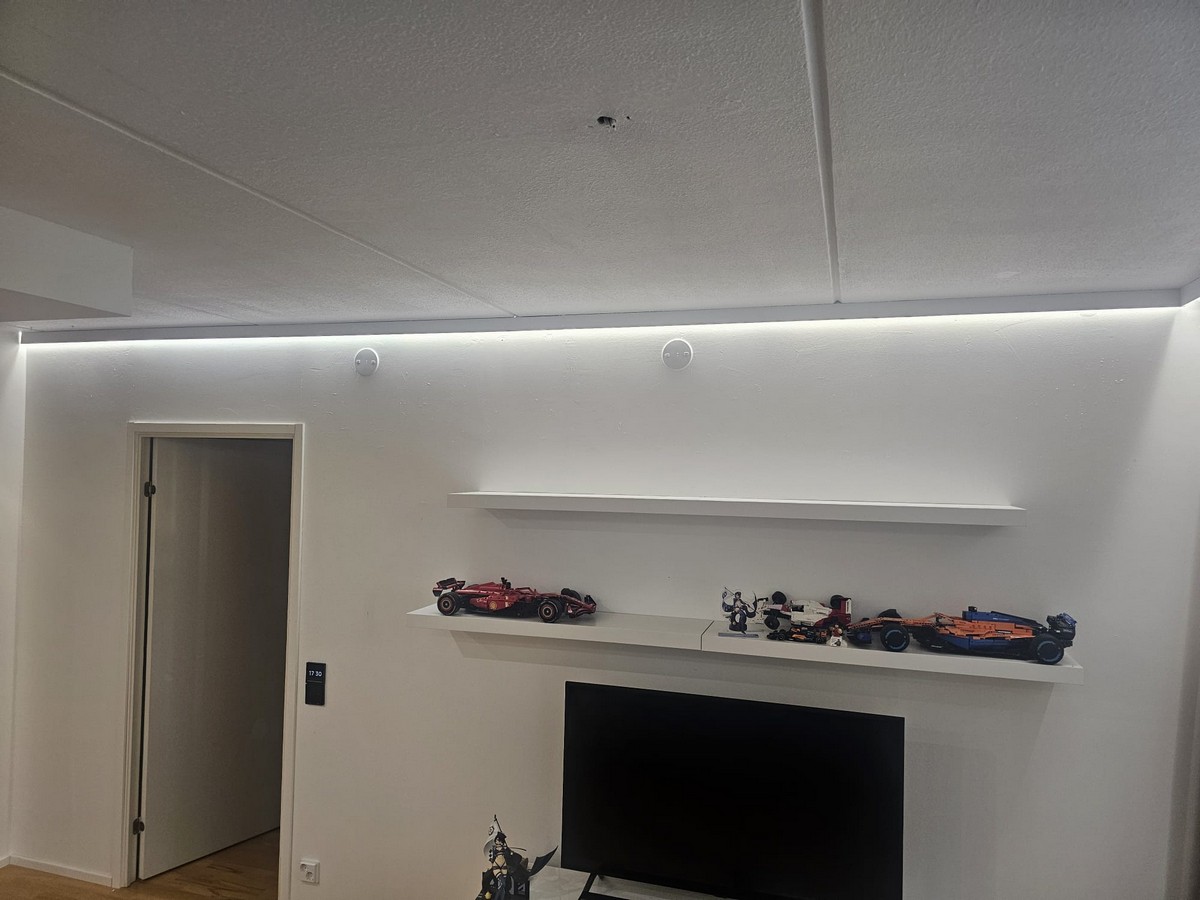
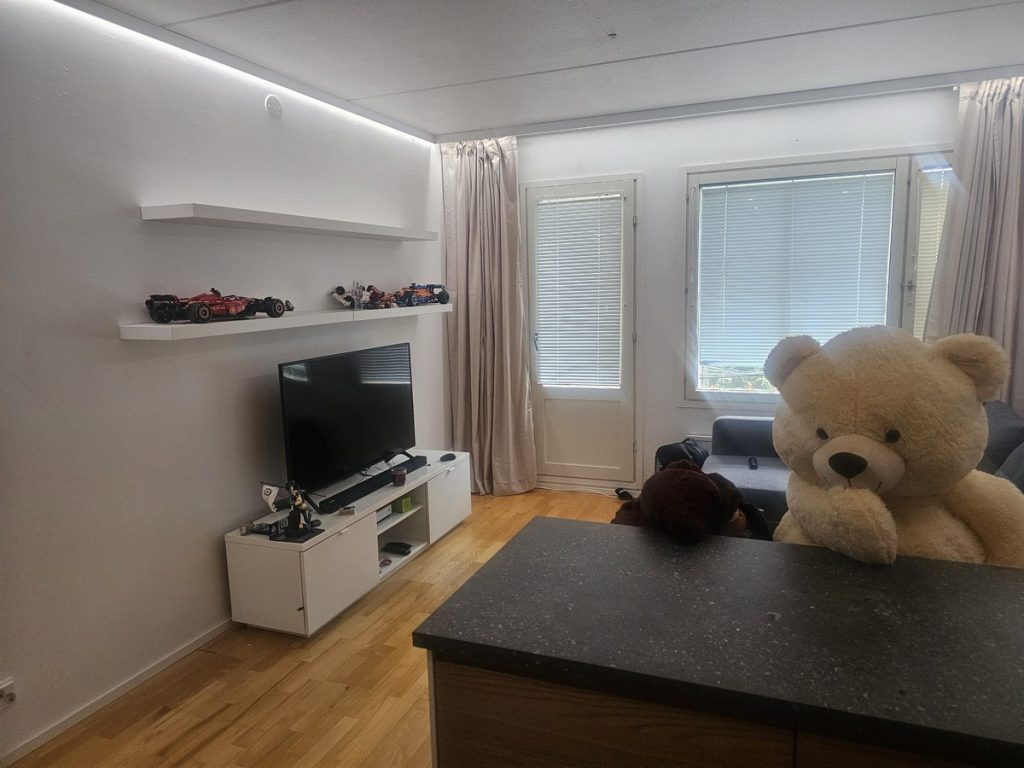
1. Corner profile on the surface – for a finished room
An aluminium corner profile is screwed into the wall-ceiling junction. The shape of the profile directs light to the ceiling and the wall, and the front plate of the profile itself acts as the glare shield. It shows as a corner trim that reads as a decorative moulding. No building work, no painting, installed in a day. Space required 40-60 mm from the wall depending on the model.
In practice: 20 m² living room, finished room
A straight 6 m wall. Corner profile + 2 x 14.4 W/m COB strip = 173 W, 200 W driver on top of a cabinet, with the cable under a corner trim down to the floor and a plug. Wireless control button. Materials €85/m, i.e. €500, driver €220 + wireless button €80.
Installation: the profile is screwed in, the strips glued, a piece of the profile removed at the corner for the LED channels, cables joined in the profile’s central channel and one cable down in a cable duct. One day.
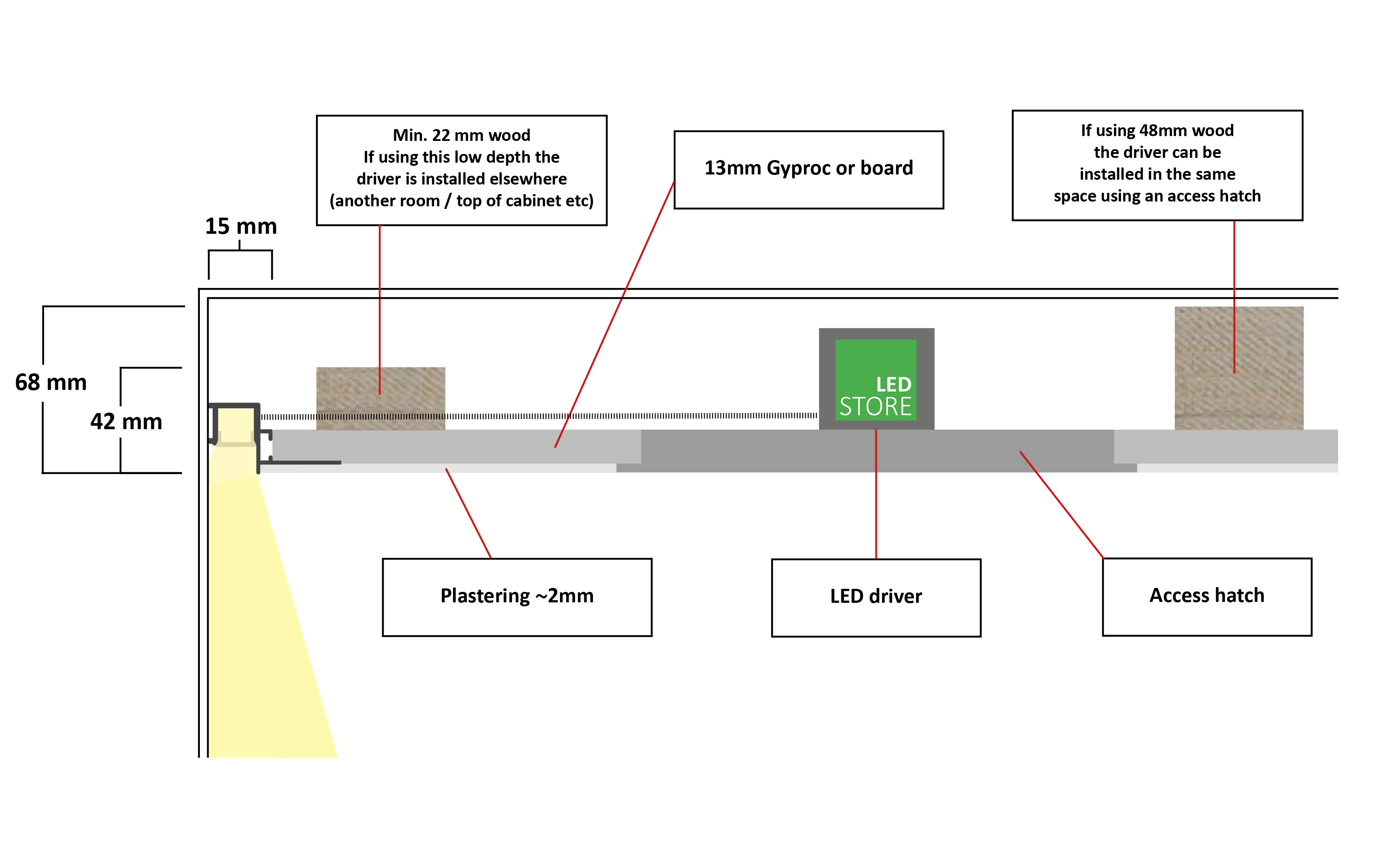
2. A groove at the top of the wall – the invisible solution
During plasterboarding, a 20-50 mm deep groove is left at the top of the wall for the profile to be recessed into. The profile does not show at all – only the light slot. The groove has to be made during plasterboarding, so it suits renovations and new builds, not a finished wall. Profiles vary, and the deeper the profile is recessed, the better the glare protection.
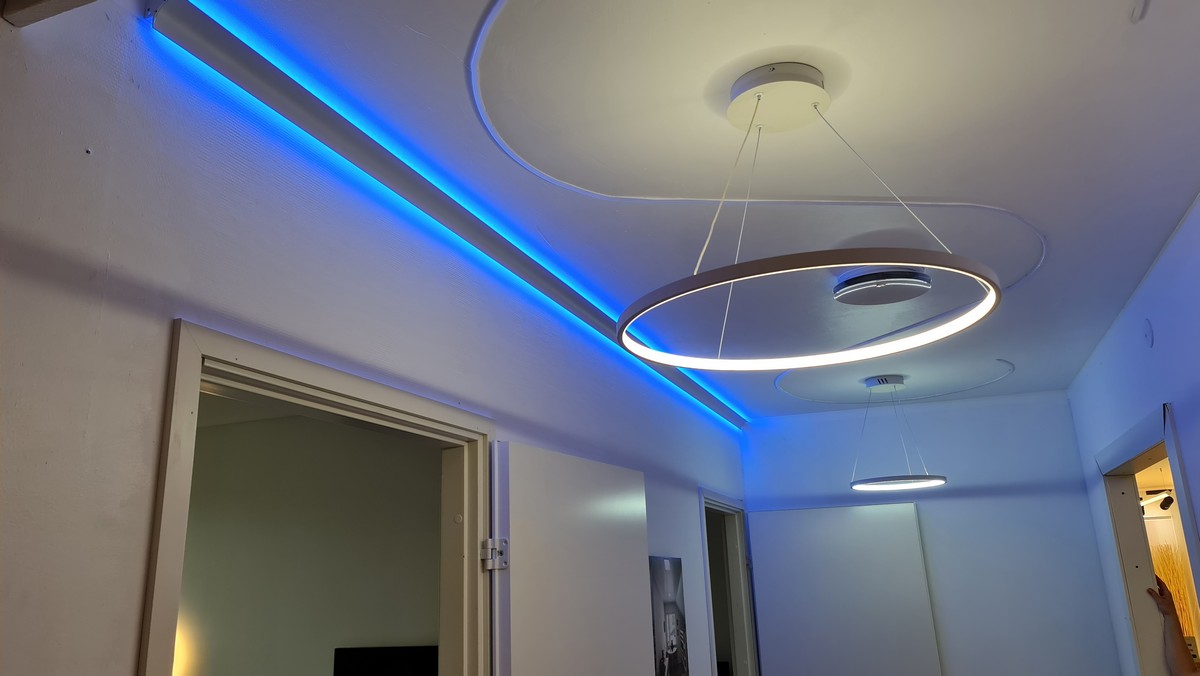
3. Curtain profile – curtain track and light together
If the window wall has curtains, a curtain profile hides the curtain track and lights the ceiling at the same time. One structure, two jobs. The light hits the top of the curtain and highlights how the fabric falls. Space required 60-80 mm, because the track fits inside.
Which way the light goes
| Direction | Effect | When |
|---|---|---|
| Ceiling only | Soft general light, the wall stays darker | General lighting, a low room feels higher |
| Wall only | The wall glows, the ceiling stays dark | Textured surfaces, artwork, a high room |
| Ceiling and wall | Even on both, no contrast | When you want as much light as possible |
Corners and ends
The profile is mitred at 45 degrees in the corner, or butted if its face is flat (e.g. DECO), and the strip is cut before the corner – a strip cannot be bent around a corner. A small darker spot of about 3-5 cm always remains in the corner, and it does not show in the light reflected onto the ceiling or wall.
The alternative is to leave the corner open and make two separate lines of light that end 10 cm before the corner – it looks intentional.
- End caps on the profile ends – they cover the strip end and the cable.
- Corner connectors for the strip – ready-made 90° corner pieces with the wire inside.
- Feed from both ends if a continuous run is over 7 metres.
| Distance from ceiling | 40-60 mm – under 30 mm makes a sharp stripe, over 100 mm wastes light |
| Strip power | 14.4 W/m for general lighting on a light ceiling, 7.2 W/m for mood |
| Strip type | COB in a profile under 20 mm, dense SMD in deeper ones |
| Ceiling surface | matt – gloss reflects the strip |
| Driver | on top of a cabinet or behind an access hatch, not inside the profile |
Light cove – plasterboard bulkhead at the wall-ceiling junction → · Retrofit → · Glare shield →
Corner and curtain profiles → LedStore
Frequently asked questions
How is indirect light done at the wall-ceiling junction?
Three ways: a corner profile screwed to the surface, a groove at the top of the wall during plasterboarding, or a curtain profile that covers the curtain track. The corner profile is the quickest and needs no building work.
How deep a groove is needed at the top of the wall?
20-30 mm is enough with a low profile. The groove is made during plasterboarding, so it has to be planned before the boards go up. A groove in a finished wall is not realistic – use a surface profile then.
Is the profile visible at the wall-ceiling junction?
A corner profile shows as a slim trim, but it reads as a decorative moulding rather than a luminaire. A profile recessed into a groove does not show at all. The choice is between appearance and amount of work.
Can a curtain track and indirect light be combined?
Yes, and it is often the best solution for a window wall. A curtain profile hides the track and lights the ceiling – two things with one structure.
Which way should the light point, ceiling or wall?
Aimed at the ceiling it gives soft general light to the whole room. Aimed at the wall it highlights the surface and makes the room feel higher. At the wall-ceiling junction both are possible – the profile model decides.
How are corners done?
The profile is mitred at 45°, the strip is cut before the corner and continued with a corner connector. The small dark spot in the corner does not show on the ceiling. The alternative is to end the lines of light 10 cm before the corner.
Profiilit tähän rakenteeseen
Profiilit katon ja seinän reunaan
Katon ja seinän kulmaan tulevat profiilit – kipsattavat upotetaan koolaukseen, pintamallit ruuvataan valmiiseen kulmaan.
Profile-INDIRECT-LOW-Z-3m
Profile-INDIRECT-curve-W-3m
profile-INDIRECT-Z-2m
profile-INDIRECT-3-W · 2,5 m tai 3 m
Profile-curtain-DECO-W-2m
Hinnat sisältävät ALV 25,5 % ja ovat LedStore.fi:n voimassa olevia hintoja. Profiilit sisältävät opaalikannen ja päätypalat; LED-nauha tilataan erikseen.
Toteutettuja kohteita
Katon ja seinän reuna toteutettuna
Verhoprofiili, ura ja pintaprofiili katon rajassa – viisi tapaa käsitellä kulma.
Kuvat: LedStore.fi toteutetuista kohteista.