
Design
Dimming and control in indirect lighting
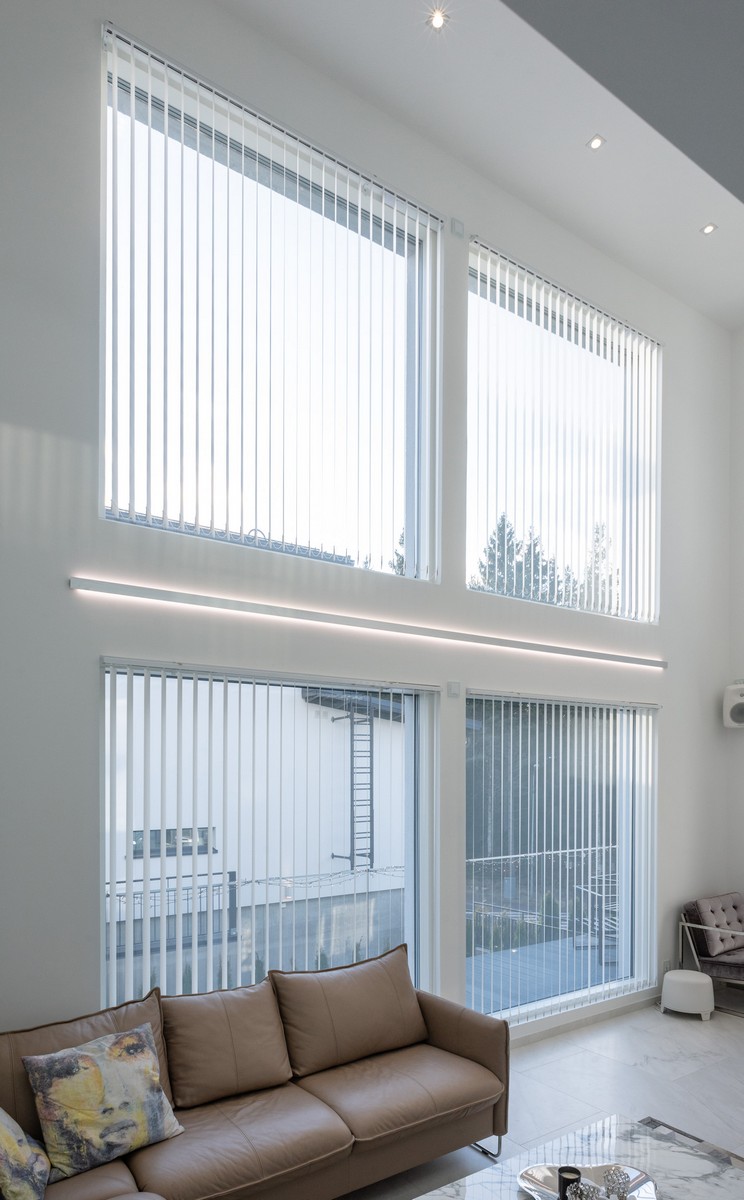
The same strip is general lighting by day and mood lighting in the evening – if it can be dimmed. Without a dimmer the room has one light level, and it is wrong half the time.

Why a dimmer is practically essential
Indirect light is sized as general lighting: 14.4 W/m and a target of 150-250 lux, so you can clean and read in the room. But in the evening watching television it is too much – you want 20-30 %. Without a dimmer the options are full light or darkness, and you end up switching on a floor lamp and leaving the indirect light unused. Then the whole investment was wasted.
A dimmer is the cheapest way to get two lighting schemes from one. It costs €30-120, and the decision has to be made before the cabling – more on that below.
Four ways to dim – what suits what
| Zigbee | TRIAC | 0-10 V | DALI | |
|---|---|---|---|---|
| How it works | Wireless radio in the driver | Wall dimmer cuts the mains voltage | 0-10 V control voltage to the driver | Digital bus to the driver |
| Cabling | 230 V supply to the driver only | Supply + switch wire from the dimmer | Supply + 2 control wires | Supply + 2-wire bus |
| Buttons | Battery, wireless, anywhere | Rotary dimmer in the wall | Separate controller | Bus buttons |
| Scenes, scheduling | Yes, from an app | No, but push-dim relays make it possible (e.g. Zigbee) | No | Yes, by programming |
| Flicker risk | No, thanks to a high PWM frequency | Yes, if the dimmer and driver do not match | No | No, thanks to a high PWM frequency |
| Changeable afterwards | Yes | No | No | By programming |
| Price per control point | €60-120 | €30-120 | €80-150 | €50-300 |
| Suits | Home, retrofit | One room, no other wishes | Legacy systems | Office, commercial, home automation |
Zigbee – home and retrofit
The driver has a radio and the button is battery powered: no control cable, the button position can be decided after moving in, and scenes are programmed on the phone. The only control method that works in a finished home without opening walls. Needs one gateway per house, connected to the router.
In practice: living room with a light cove and kickboard light
Two Zigbee drivers, one for each. One battery button next to the sofa with four buttons: ”Day” 100 %, ”Evening” 30 % + kickboard, ”TV” 10 % kickboard only, ”Off”. A schedule switches everything off at 23:00. Button and gateway together about €150, no cabling (+ the lights).
TRIAC – cheapest, but compatibility decides
An ordinary rotary dimmer in the wall, as with incandescent bulbs. It only works if the dimmer and driver are designed to go together – the wrong pair flickers at the lowest settings and hums. Flicker and hum come from one being, for example, leading edge and the other trailing edge – two different ways of doing TRIAC dimming. Buy both from the same place and make sure they are compatible. No scenes, no scheduling, no changeability.
DALI – office and commercial
A wired digital bus where every driver has its own address. Groups, scenes and daylight control are programmed. The standard in commercial spaces, and it integrates with home automation. Oversized for a home unless the house gets a DALI bus anyway – the bus cannot be added afterwards.
Decide before the cabling
TRIAC, 0-10 V and DALI need a control wire run under the plasterboard. If the decision is made later, the only option is Zigbee. It is not a bad option – but it will then be the only one, and that is worth knowing.
Dimmable driver – what it means
Dimming happens in the driver, not the strip. A standard driver cannot dim – a dimmer connected to it causes flicker or destroys the driver. A dimmable driver has either a built-in Zigbee radio, a TRIAC-compatible input, a 0-10 V input or a DALI connector. Choose the driver by control method, not the other way round.
| Dimming range | good driver 1-100 %, cheap 10-100 % – the lowest level decides the night light |
| PWM frequency | over 1 kHz, preferably 2-4 kHz – below that flicker shows on camera and tires the eyes |
| Load | at most 80 % of rated power, even when dimmed |
| CCT strip | needs a two-channel driver – colour temperature and brightness separately |
Three control points worth considering at home
- Motion sensor in the hallway, corridor, WC and utility room. A Zigbee sensor is battery powered and can dim at night.
- Scheduling for kickboard and stair lights: they come on dimmed at dusk and switch off in the morning. No switch at all.
- One master switch by the front door: ”All off” when you leave. A Zigbee scene on one button.
Driver sizing → · Questions for the electrical designer → · Colour temperature and CCT →
Control and dimmable drivers → LedStore
Frequently asked questions
Does indirect lighting need a dimmer?
In practice, yes. Indirect light is sized as general lighting, and in the evening it is too much. Without a dimmer the room has one light level and the indirect light goes unused when you want atmosphere.
Zigbee or DALI for the home?
Zigbee. No control cable, battery buttons, scenes on the phone, changeable afterwards. DALI only if the house gets a DALI bus anyway – the bus cannot be added later.
Why does an LED strip flicker when dimmed?
The dimmer and driver do not match – the most common TRIAC dimming problem. Or the driver’s PWM frequency is under 1 kHz. The solution is a dimmable driver designed for that exact dimmer, or Zigbee, where the problem does not exist.
Can dimming be added afterwards?
With Zigbee, yes: replace the driver with a Zigbee model and add a battery button. TRIAC, 0-10 V and DALI need a control wire run under the plasterboard – afterwards that means opening walls.
What is a dimmable driver?
A driver with a control input or a built-in radio. Dimming happens in the driver, not the strip. A standard driver does not dim, and connecting a dimmer in front of it destroys it or causes flicker.
How do you dim the light to zero?
A good driver dims to 1 %, a cheap one leaves a glow at 10 %. If you want the night light almost dark, check the driver’s dimming range before buying.